

Share Articles
Latest Articles
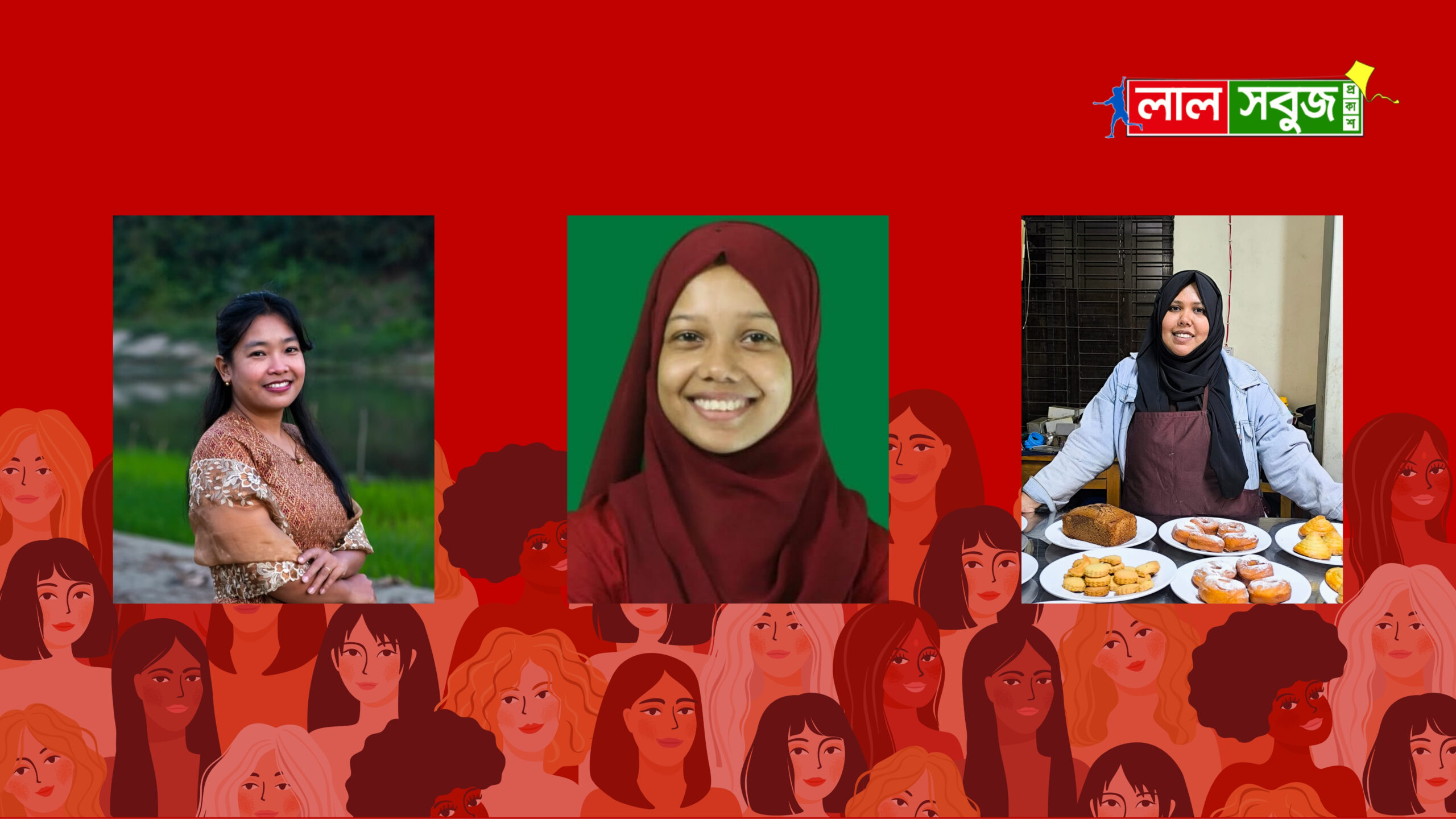
When fog gathers on the top of a hill, the path to the plains cannot be seen. For Lily Pru Marma, life once felt the same. Coming from an ordinary family in Rangamati, the busy streets of Dhaka or national policy-making circles once seemed far beyond her imagination. Today, however, Lily has not only found her place in the plains but has also become the General Secretary of the influential national youth organization Young Development Society of Bangladesh (YDSB).
Lily’s struggle was like walking on the edge of a double-edged sword. Within her own community, she faced criticism for working closely with the Bengali community. In the plains, she had to confront an invisible barrier created by her ethnic identity.
“There was no indigenous woman before me who could show the way,” Lily recalled while talking about her early days. Today, she has become a role model for many young girls who once feared dreaming beyond the boundaries of the hills.
While Lily’s quiet revolution was inspiring waves in the hills, another young girl in **Mohammadpur, Dhaka, was fighting against a deeply rooted social norm.
Her name is Anika. A few years ago, when she was at the age of continuing her education and discovering herself, her family had already started preparations for her marriage. In many parts of society, early marriage often cuts off a girl’s opportunities, but Anika refused to accept that fate. She firmly said “no” to child marriage and family pressure.
But her determination did not allow her to sit idle. She knew that without standing on her own feet, society would never allow her peace. So she started her own venture called Goynashundori.
Today, Anika is no longer the helpless teenager she once was. Her jewelry products now reach customers across Dhaka—from Hatirjheel to many major intersections of the capital—mainly through social media platforms. Her uniqueness lies not only in changing her own destiny but also in creating opportunities for other women. The girl who once refused to marry against her will is now inspiring others to become financially independent. Her monthly income of over one lakh taka is no longer just a number—it is a symbol of her freedom.
The third story in this journey belongs to Mou from Barishal, whose battle was not only with society but also with her own body.
In 2017, when cancer was diagnosed in her body, it seemed as if the lights of her life would go out. After fighting the disease for seven long years, she survived, but her body was no longer the same. Professionally, she had been a skilled mehendi artist, but after cancer, her weakened body could not endure sitting for long hours to continue the delicate work.
Yet Mou refused to surrender. Leaving the fine art of mehendi behind, she turned to the warmth of the kitchen and started a home-based catering business.
“When I cook, I forget that I am a cancer survivor. I feel like I am simply a cook,” Mou said, her voice reflecting the satisfaction of overcoming life’s toughest battle. From her kitchen in Barishal, she is proving that no physical illness can defeat someone who has the determination to survive.
Why Can’t Everyone Become Like Anika or Lily?
While the success stories of these three women inspire us, they also raise an important question—why do many women stop halfway? Why don’t all stories end like those of Anika, Lily, or Mou?
Conversations with many women who could not continue their work reveal that their failure was not due to a lack of talent, but rather structural challenges.
- Family pressure: Many women drop out because of pressure from their families. As their work grows and demands more time, it is often dismissed as a “luxury” or “extra activity,” forcing them to stop. Not everyone has the mental strength to resist these pressures like Anika or Lily.
- Lack of financial backup: Mou and Anika managed to move forward because they were courageous and willing to take risks. But many women who quit did not have financial security. When family illness or other financial crises arise, the capital saved for their business is often spent, leaving them unable to start again.
- Loneliness and lack of guidance: When Lily first came from the hills, she had no support system. Many women give up midway because they become isolated. Without mentors or companions to guide them and help correct their mistakes, talented entrepreneurs often lose their path too early.
A New Story of Bangladesh
The leadership of Lily Pru Marma, Anika’s Goynashundori, and Mou’s cooking together represent a new narrative of Bangladesh. They have proven that no matter how great the obstacles are, success becomes possible when one believes in oneself and knows how to say “no” at the right time.
On this International Women’s Day, their stories are not just sources of inspiration—they are powerful lessons for society about courage, resilience, and the pursuit of independence.