

Share Articles
Latest Articles
Shimul sits in a crowded coffee shop in Dhaka, staring intensely at his laptop screen. He isn’t working on an office project or browsing for fun; he is gathering signatures for an online petition. His goal is to protect a historic local pond from being filled up by building public support and catching the government’s attention. A few years ago, such a demand would have required street protests or physically carrying memos to government offices. Today, Shimul’s single “click” unites thousands of people for the same cause in an instant.
Shimul’s work is a bright example of digital democracy. It proves that in the modern age, citizen participation is not only easier but also faster and more dynamic.
E-Voting: The Gap Between Dreams and Reality
The most discussed and debated part of digital democracy is ‘E-Voting.’ To make the voting process faster and more accurate, many countries now use digital devices instead of paper ballots. In theory, this is convenient for voters and saves election costs in the long run. However, the success of this technology depends on one single word— ‘Trust.’
In Bangladesh, the journey of this technology has been complicated. Although Electronic Voting Machines (EVMs) were partially used in the 2018 elections, the Election Commission has decided to use paper ballots for the upcoming 2026 general elections. According to the Commission, they have stepped away from e-voting for now due to the lack of interest from some political parties and the challenges of ensuring transparency.
Postal Voting: A ‘Hybrid’ Tech Solution
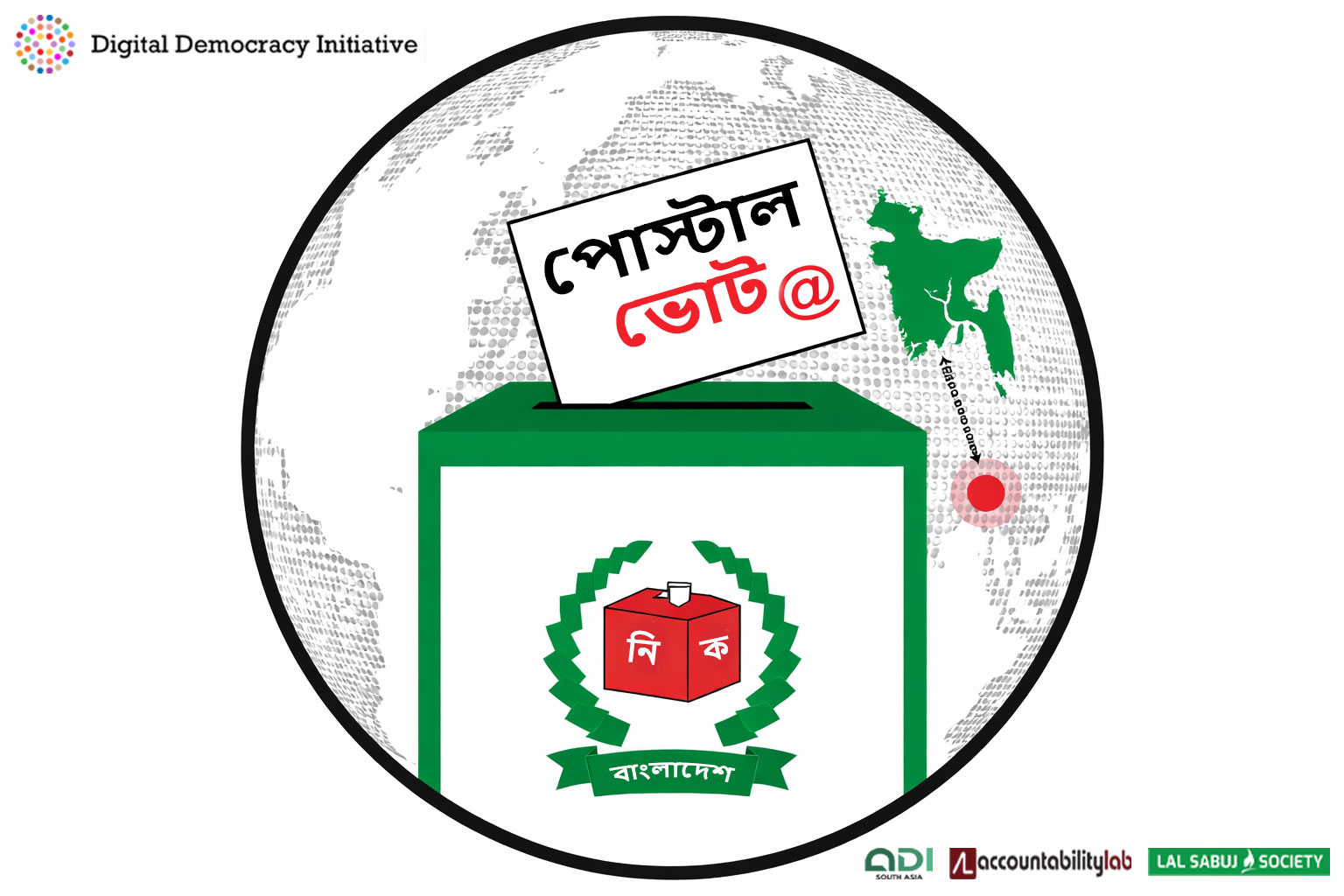
While there is no direct e-voting, the Election Commission is using technology in a unique way for the 2026 elections. A special ‘hybrid’ system has been launched for expatriates (NRBs), election officials, and prisoners.
The example of Nusrat, an expatriate living in the United States, is a perfect illustration. She is exercising her right to vote using the ‘Postal Vote BD’ app. First, Nusrat completed her digital registration using her NID and passport on the app. The Election Commission then sent a paper ballot to her address by mail. After casting her vote, she mailed it back. Interestingly, just like tracking a courier, Nusrat can see on her app exactly when the ballot reaches the Commission. Although the physical vote is on paper, the management is entirely digital and transparent.
Possibilities vs. Challenges
E-voting or digital participation can bring a revolution to the election system, but the challenges cannot be ignored.
The Opportunities:
- Participation will increase for expatriates, people with disabilities, and voters in remote areas.
- Accurate results can be obtained almost instantly through software.
- In the long run, the massive costs of printing and transporting ballots will decrease.
The Challenges:
- There are strong fears among political parties regarding software manipulation or hacking.
- Using digital devices remains difficult for rural and elderly voters.
- Without a VVPAT (Verifiable Paper Trail), voters cannot be certain if their vote was counted correctly for their chosen symbol.
From online petitions to digital postal votes, everything is an inseparable part of digital democracy. If Bangladesh can create a proper balance between technology and security, these digital initiatives will not only increase citizen convenience but also give democracy a new, real strength.