

Share Articles
Latest Articles
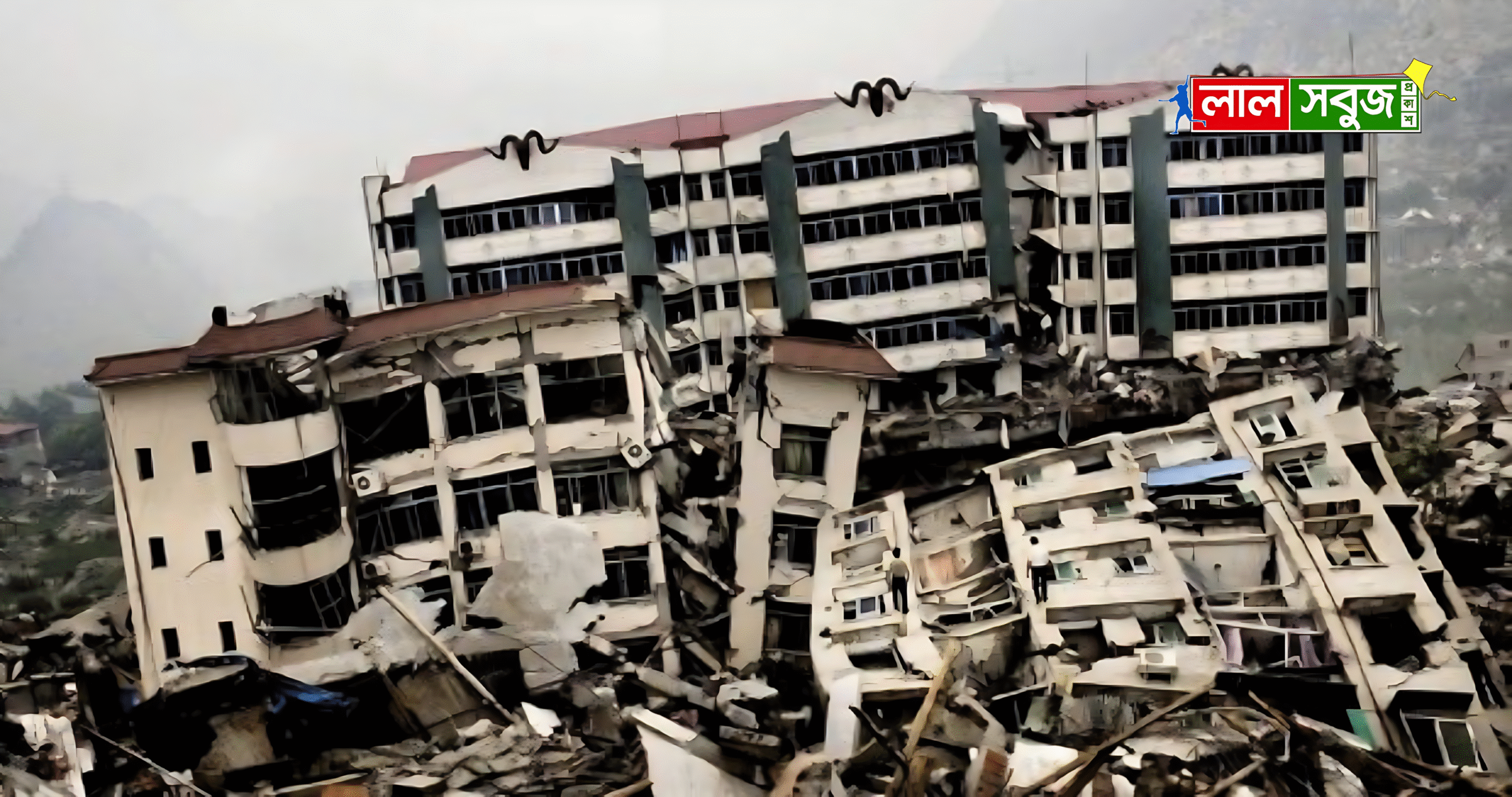
It is late at night. Suddenly the floor begins to shake, and ceiling fans and cabinets start swaying. In those few seconds of fear, a question arises—why do earthquakes happen? What occurs inside the Earth that makes solid ground tremble so violently?
Instability Beneath the Earth’s Surface
Although the Earth appears solid from the outside, it is not stable within. The Earth’s crust and the upper part of the mantle together form several massive tectonic plates. These plates are constantly moving—sometimes colliding with each other, sometimes drifting apart, and sometimes sliding past one another.
When immense pressure builds up at the boundary between two plates (known as a fault line) and is suddenly released, an earthquake occurs. The released energy spreads outward in the form of seismic waves, which we feel as ground shaking.
Fault Lines: The Birthplace of Earthquakes
Earthquakes usually occur near fault lines. A fault is a fracture or weak zone in the Earth’s crust. Along these faults, tectonic plates can become stuck while pressure continues to build beneath the surface. When the stuck portion suddenly slips, a large amount of energy is released—this is an earthquake.
Where Does an Earthquake Begin?
The point inside the Earth where an earthquake originates is called the hypocenter or focus. The point directly above it on the Earth’s surface is known as the epicenter. Damage is usually greatest in areas close to the epicenter.
Why Are Some Earthquakes Stronger?
The strength of an earthquake depends on:
- The size of the area along the fault that slipped
- The depth at which the earthquake occurred
- The amount of energy that had accumulated
Earthquake magnitude is measured using the Richter scale or the Moment Magnitude scale. As the magnitude increases, the released energy increases exponentially.
How Vulnerable Is Bangladesh?
Bangladesh lies near the junction of three major tectonic plates—the Indian Plate, the Eurasian Plate, and the Burma Plate. As a result, the country falls within an earthquake-prone region. Areas such as Sylhet, Chattogram (Chittagong), and Dhaka are considered particularly at risk.
Other Causes of Earthquakes
Although most major earthquakes are caused by tectonic plate movement, other factors can also trigger them:
- Volcanic eruptions
- Underground gas or mineral extraction
- Pressure from large dams or reservoirs
- Nuclear explosions
What Can We Do?
Earthquakes cannot be prevented, but preparedness can reduce their impact. Steps include:
- Constructing earthquake-resistant buildings
- Conducting regular emergency drills
- Securing heavy furniture to walls
- Preparing emergency communication plans
Nature will follow its own rules. However, awareness and preparation can help control panic and minimize damage.
Earthquakes remind us that the Earth is not still—it is alive and constantly moving. The brief jolts we feel are simply moments of that continuous motion, though they can become terrifying experiences for us.